
Bringing home a puppy is one of life’s happiest moments. The toys are ready. The bed is set up. The photos have probably already started filling your camera roll.
Now comes the next exciting chapter: helping your puppy learn how to thrive in their new world.
Training is one of the best ways to build trust, create communication, and help your puppy feel confident at home. Puppies learn best through consistency, patience, and positive reinforcement. Starting early gives them the foundation they need to become happy, well-mannered companions.
So what are the first commands every puppy should learn?
What Are the Most Important Commands for a Puppy to Learn First?
The best early commands focus on safety, communication, and everyday life. These five basics give your puppy important skills they will use for years to come.
1. “Sit” Helps Your Puppy Learn Patience
“Sit” is often one of the first commands puppies learn because it is simple, useful, and easy to practice.
A reliable sit can help your puppy pause during greetings, mealtime, and other exciting moments. With regular practice, holding a sit can also help build impulse control and encourage better everyday habits.
How to teach it:
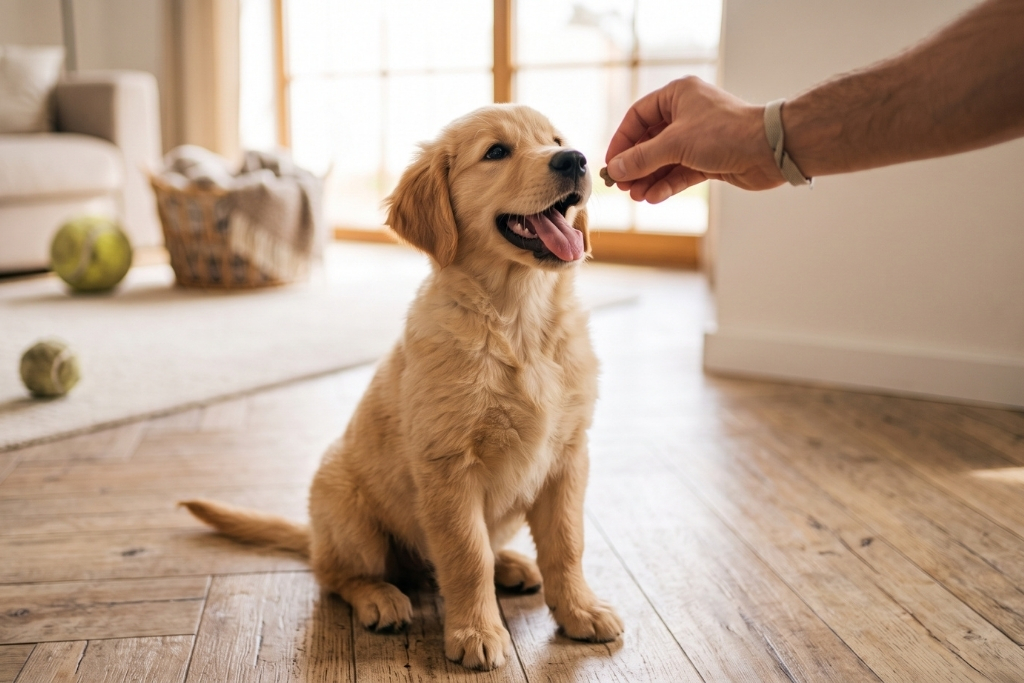
- Hold a treat near your puppy’s nose.
- Slowly move the treat upward and slightly over their head.
- As your puppy follows the treat, their bottom should naturally lower to the ground.
- As soon as they sit, praise them and reward them.
- Once they follow your hand signal consistently, begin saying “sit” just before giving the signal.
With patience, repetition, and positive reinforcement, “sit” becomes a foundation for communication, focus, and positive routines.
2. “Stay” Builds Self-Control
“Stay” teaches your puppy to pause and wait. This command can be helpful at home, during walks, and in situations where safety matters.
Start with only a few seconds. Reward your puppy for staying in place, then slowly increase the time and distance.
3. “Come” Builds a Reliable Recall
A strong recall command helps your puppy return to you when called. It is one of the most important skills for safety.
Practice “come” in a quiet area first. Use an excited voice, reward your puppy when they reach you, and make coming to you a positive experience.
4. “Down” Encourages Calm Behavior
“Down” helps puppies learn how to settle. It can be especially helpful when your energetic pup needs a little help relaxing.
Guide your puppy into position with a treat, say “down,” and reward them when they follow through.
5. “Leave It” Teaches Good Choices
Puppies explore the world with their noses and mouths. “Leave it” helps them understand that some things should stay untouched.
Practice with a treat in your closed hand. Reward your puppy when they stop trying to get it.
How Petland Helps You Build a Lifetime Bond With Your Puppy
Training is one of the first steps in creating a happy relationship with your puppy, but you never have to figure it all out alone.
Finding the right puppy is only the beginning. The journey continues as you learn your puppy’s personality, understand their needs, and build everyday routines that help them feel safe and confident.
At Petland Lewis Center, Ohio, we’re here to support families through every stage of puppy ownership. From helping you find the right furry match for your lifestyle to providing resources, guidance, and care tips that help your puppy thrive, our goal is to make the transition into puppy parenthood as smooth and rewarding as possible.
Because puppies don’t come with an instruction manual (even though they probably should), having trusted support makes all the difference. With patience, consistency, and plenty of love, those first “sit,” “stay,” and “come” moments become the foundation for years of tail wags, adventures, and memories together.
Hungry for more? The next chapter’s even better! Follow the paw prints below to keep reading.
New Puppy Checklist: Everything You Need Before Day One
Finding the Perfect Puppy: A Breed Comparison Guide